


A Harvard professor named George Church, interviewed by CBS, has announced he’s working on a DNA-based dating app. The aim? To find your other half while minimising the risk of passing on a genetic disease to your future child.
A DNA-based dating app: a eugenics project
The researcher claims that choosing your partner based on their DNA could prevent around 7,000 genetic diseases.
A geneticist at Harvard Medical School is working on a dating app that matches users based on their DNA. The goal: to eliminate all genetic diseases. 60 Minutes reports, tonight. https://t.co/AEFnU8faHi pic.twitter.com/6tzGx0B8ns
— 60 Minutes (@60Minutes) December 8, 2019
However, based on its genetic criteria, his dating app would exclude people with statistically “bad” DNA. Wanting to select genes to create an “improved” human is hardly a new philosophical concept.
But this idea, which we call eugenics, is a slippery slope. Indeed, it can lead to all manner of abuses. Historically, the Nazis were rather keen on the subject. And in terms of science fiction, you immediately think of the dystopias Gattaca and Brave New World.
Incidentally, George Church seems to frequently get involved in rather daft projects. Among other things, trying to recreate a mammoth, or wanting to clone a Neanderthal.
This isn’t the first time the concept of genetic compatibility dating has come up. Genepartner.com, a genetic compatibility dating site, was already offering its services back in 2017.
An app to avoid sex between cousins in Iceland
In Iceland, there’s an app, ÍslendingaApp, which lets you scan the people you meet, to determine whether they’re related to you. It’s not, of course, based on DNA, but on the data contained in the Icelandic book, which records the genealogy of the country’s residents.
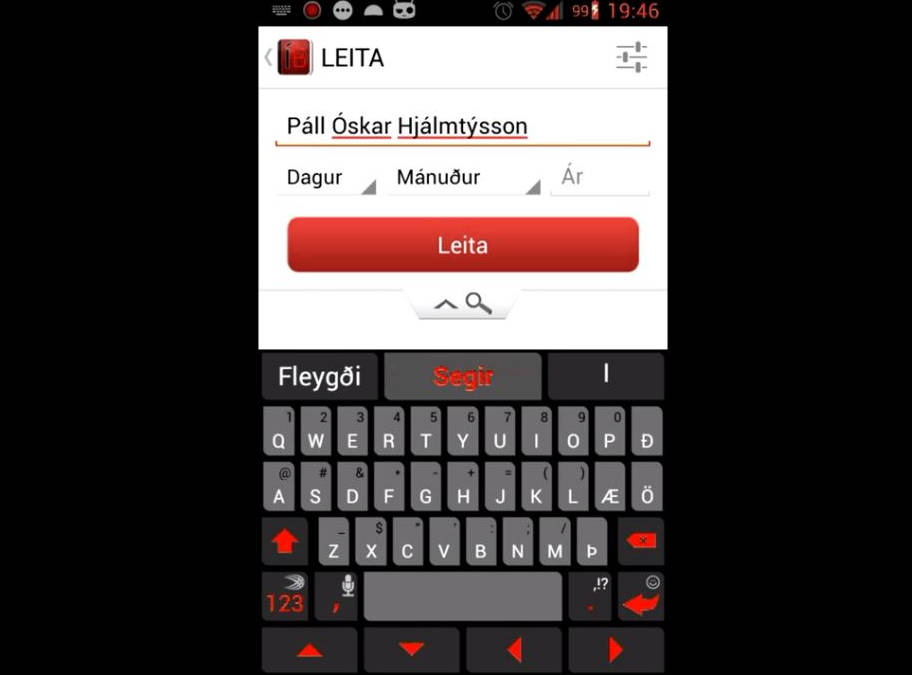
Trying to learn about your ancestors is a fascinating pastime. But in Iceland, due to the island geography and the country’s history, this app sees rather unusual use. Indeed, the majority of the population descends from a group of ninth-century Viking settlers. So family trees are heavily intertwined, and running into a cousin by chance is common.
When you go on a date, an incongruous concern arises: avoiding accidental incest. I mean, incest is a bit of a stretch as a term. In France, marriage between first cousins is legal. Let’s say, sex between cousins who don’t know each other. It’s not the end of the world, but it can be awkward at family dinners. And too close a family tie can cause genetic problems if you’re planning to have babies.

On the first date, you scan each other with the app, to check that you’re not in the same family. However, it only warns you if you’re first cousins, that is, if you share a grandparent.