
In a previous article, we looked in detail at the toxic components to avoid when choosing a sex toy. Now we’re going to look at the composition of a lubricant. Which substances should you avoid in lubricants and other erotic “consumable” products: serums, gels and creams with a stimulating effect, etc.?
There’s often a lot of talk about parabens in the media. How can you tell whether a lubricant contains them? Which other ingredients should you be wary of?
Reading the composition of a lubricant
Composition of a lubricant or stimulating gel
Since 2013, European regulations have made clear labelling of cosmetic products mandatory, including lubricants and stimulating gels.
Under the INCI standard, the list of ingredients shown on the product packaging lists them in English, in descending order of quantity. That’s why you often discover that a lubricant or shampoo containing plant extracts doesn’t, in the end, contain all that much of them.
The problem is that when you order a lubricant online, you often don’t see the list of ingredients on the packaging until after you’ve bought it. It’s not much use discovering that your lubricant contains nasty stuff once you’ve paid for it! Some shops, such as Lovehoney, always provide the composition of the “consumable” products they sell, helping you avoid any nasty surprises.
Composition of condoms
As far as legislation is concerned, condoms are not considered cosmetics, but medical devices. As a result, their regulation falls under the remit of the National Agency for the Safety of Medicines and Health Products (ANSM). This agency sets various safety standards (mainly concerning strength), but does not require any list of regulated substances. What’s more, manufacturers are not required to state the composition of condoms (even when they are pre-lubricated).
Parabens
Use
Because of their antibacterial and antifungal properties, parabens are used as preservatives in many cosmetic and pharmaceutical products. This includes some lubricants and stimulating gels (as well as shower gels, shampoos, moisturisers, etc.).
These days, their unfortunate notoriety has made parabens unpopular. They are less common than they used to be, but you can still find them in a few products.
Health risks
Parabens are suspected of disrupting the endocrine system, and therefore of harming fertility and increasing the risk of hormone-related cancers, particularly breast cancer.
They may also be linked to the risk of obesity in children.
Some people are also allergic to them.
Legislation
Five parabens (isopropylparaben, isobutylparaben, phenylparaben, benzylparaben and pentylparaben) were banned under European regulations in 2014. But these are not among the parabens most commonly used in cosmetics. Among the list of authorised preservatives, there is a fairly long list of parabens.
How can you spot them in a lubricant’s ingredients?
It’s simple: in the product’s list of ingredients, any component whose name ends in “paraben” is a paraben.
Glycerine and propylene glycol
Glycerine and propylene glycol, which are very commonly used in lubricants, are not toxic, but:
- They are glucose derivatives, which bacteria feed on: for people with a sensitive vaginal flora, this can encourage bacterial infections caused by yeast (candidiasis).
- They can be irritating.
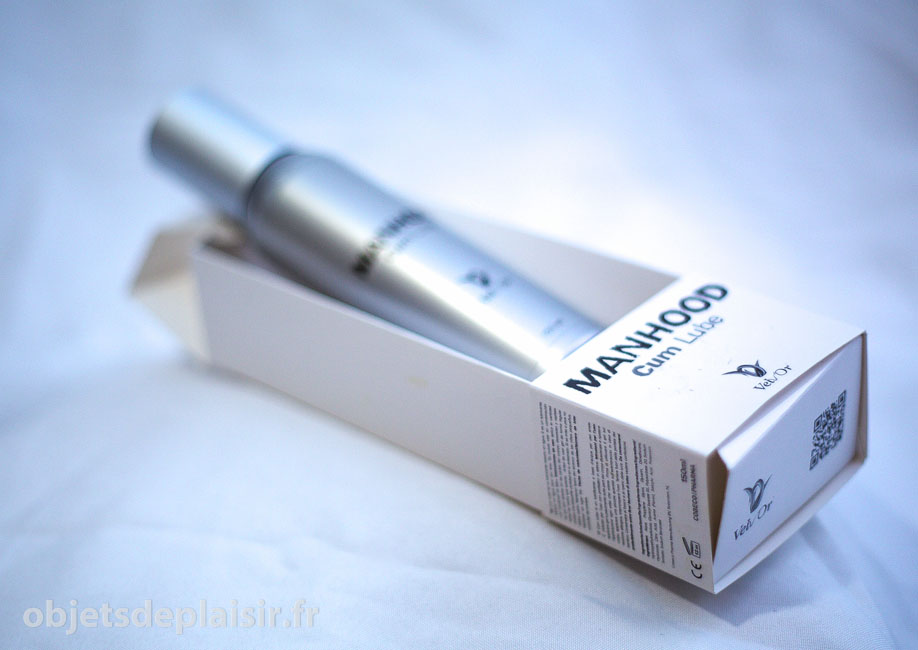
Velv’Or’s Manhood Cum Lube lubricant contains glycerine and propylene glycol
Nonoxynol-9
Nonoxynol-9 is a chemical compound with spermicidal and microbicidal properties, used in spermicidal gels, sponges and lubricants, as well as in some condoms.
The problem? Nonoxynol-9 significantly increases the risk of HIV and papillomavirus transmission. As an irritant, it increases the incidence of genital and anal lesions. It also disrupts pH balance, which can cause vaginal infections.
Although several studies have demonstrated the dangers of Nonoxynol-9 and many brands have stopped using it, this compound is still authorised and used.
Chlorhexidine gluconate
Chlorhexidine gluconate is an antibacterial agent used in some lubricants. It can be irritating, and some people are allergic to it.
Petroleum derivatives
Petroleum jelly, paraffin and other mineral oils tend to disrupt vaginal pH balance. What’s more, because of their viscosity, lubricants containing them are difficult to wash off, and residue may remain after washing.
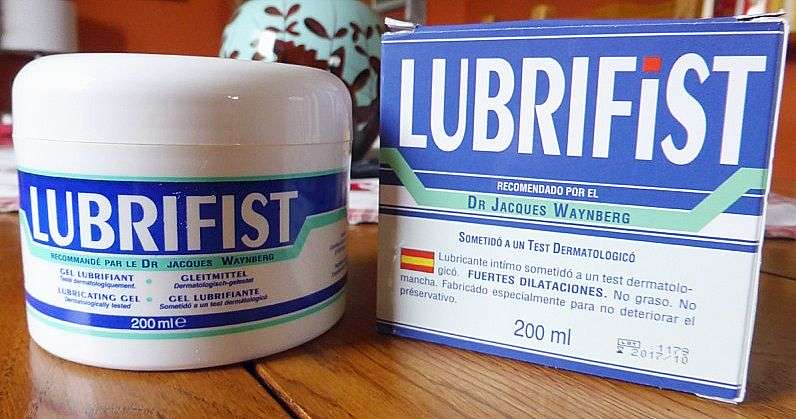
Lubrifist contains paraffin
Lidocaine and benzocaine
Active ingredients in some medicines for sore throats, lidocaine and benzocaine are also used for their anaesthetic properties in sprays, lubricants and condoms designed to delay ejaculation, and in “relaxing” lubricants for anal use.
In their case, the problem isn’t any potential toxicity, but simply the risk of injuring yourself without realising it. The (mild) local anaesthetic numbs the signal telling you that something is rubbing too much or is too big.
Other things to consider in a lubricant’s composition
This list of components to avoid is not exhaustive. I’ve limited myself to ingredients whose presence I was able to verify (with a little Google search for those I’d never come across “in real life”, or at least not paid attention to) in products for sexual use that can be bought in France.
Lubricants that get everything right are unfortunately very rare, and the choice of lubricant that suits you will also depend on your anatomy and what you want to use it for.
More information
The Big Lube Guide by Dangerous Lilly (in English) offers a more comprehensive list of ingredients to avoid.
Much to my surprise, I read the word “urea” (“urea”) among the ingredients you might come across. Huh? What? Pee in my lubricant? Yuck!
After looking into it, I found out that urea is indeed used in cosmetics. It is synthetic in origin (but identical in composition to that found in urine), and is used as a moisturiser and a preservative. The issue isn’t this whole pee thing, but the fact that urea can release formaldehyde, which is recognised as a carcinogen, cause irritation and trigger allergies.
I wasn’t able to find an example of a lubricant containing urea. But while rummaging in my bathroom, I came across a depilatory cream with urea among its ingredients.
Do your own research
In general, it’s always best to take a look at the ingredients in lubricants (when it comes to adding dodgy substances, manufacturers can have a boundless imagination...). If you’re unsure about an ingredient, Google will help you get to the bottom of it.