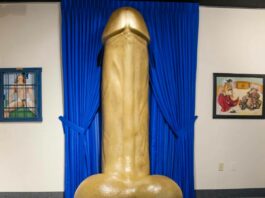

When phallic places are mentioned, some people think of the obelisk in Place de la Concorde, others of the Brussels Manneken Pis and its pissing fountain…
But in reality, the tiny penises on ancient statues and buildings that are supposed to look like dicks just because they stand more or less upright are small fry compared with the fabulous giant decorative willies that adorn the four corners of this planet.
Ready for a tour of the world’s truly phallic monuments? Off we go: settle in and admire a whole host of penis statues displayed in the open air, without even leaving your chair.
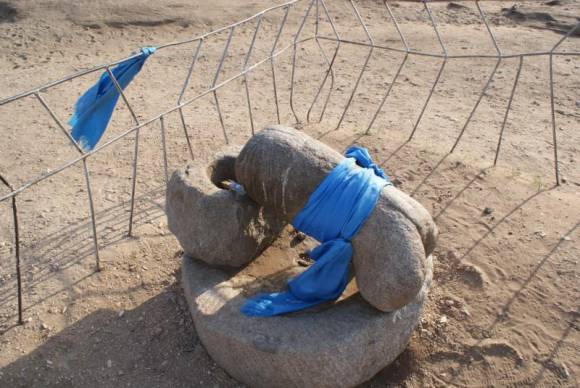
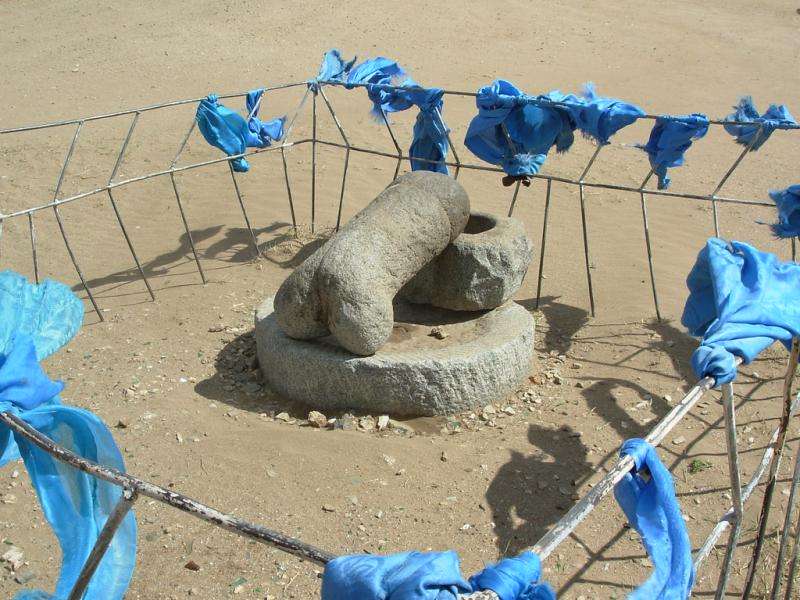
1. Kharkhorin Rock
Kharkhorin Rock, in the Mongolian steppes, is a handsome stone penis to which offerings can be made.
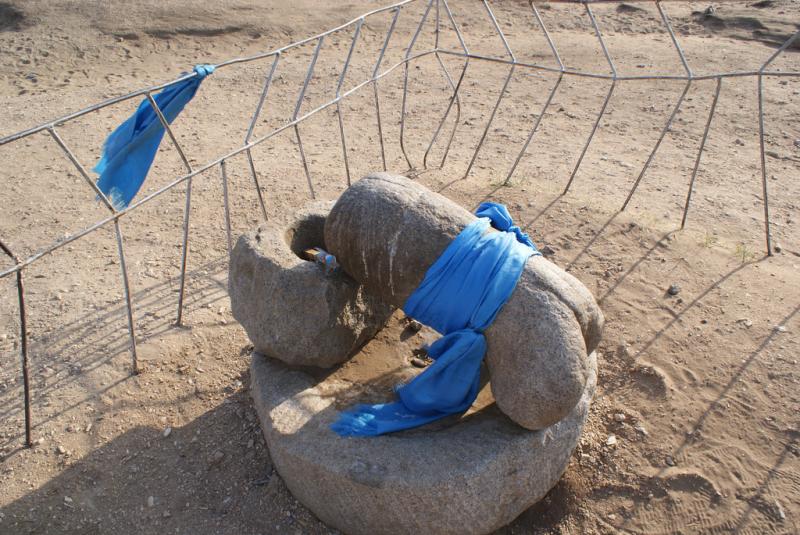
According to legend, a monk who broke his vow of celibacy and became a great seducer was punished with castration.
Kharkhorin Rock was supposedly erected to remind the other monks of this dreadful punishment and put them off fooling around with the local women. Must be a right laugh among the monks, then…
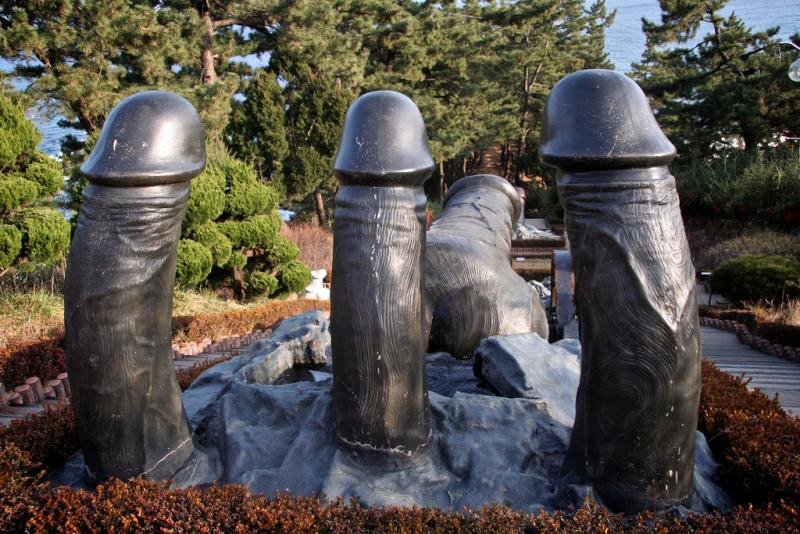
2. Haesindang Park
Haesindang Park, also known as Penis Park, is in Sinnam, near Samcheok, in South Korea. The park is home to a multitude of penis-shaped totem poles.
But I’ve already told you about it here.
3. The Temple of Dionysus on Delos
For the ancient Greeks, the little island of Delos, home to the Temple of Dionysus, was sacred. So sacred, in fact, that no one was allowed to be born or die there, for fear of offending the gods.
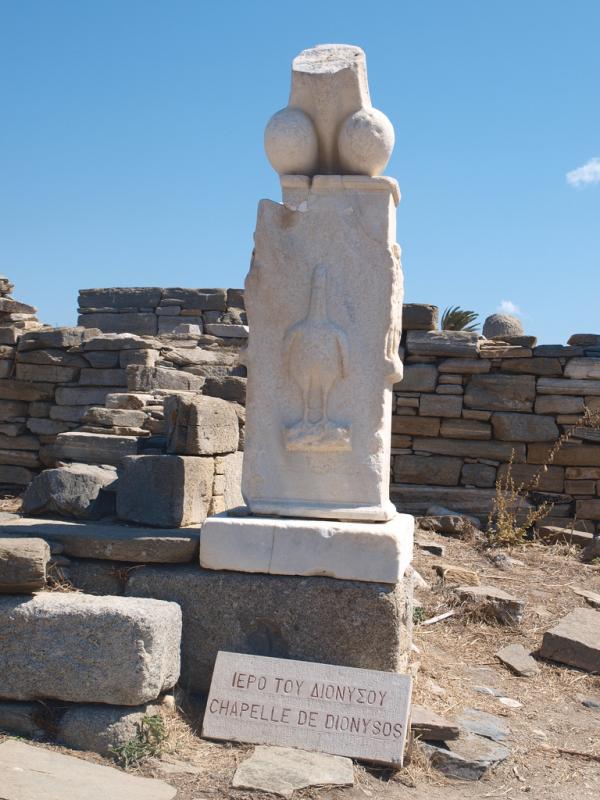
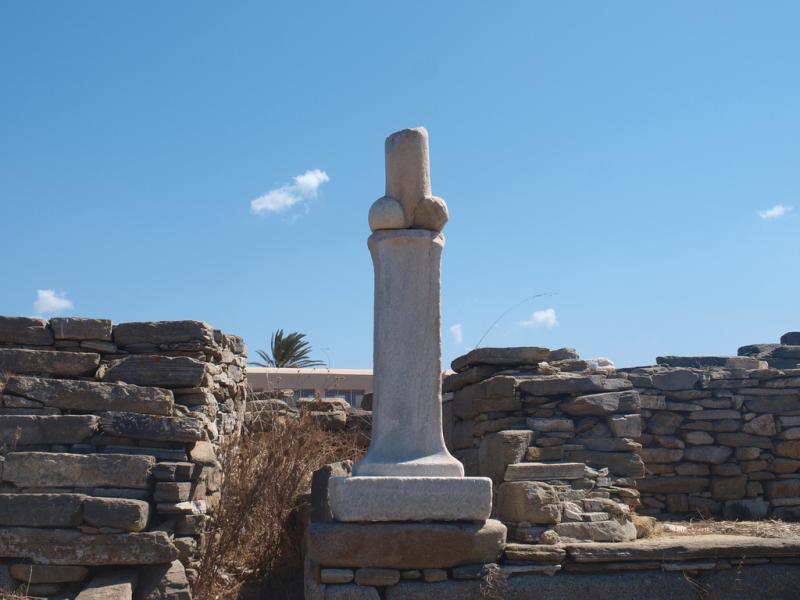
Pregnant women and the dying were therefore sent to the neighbouring island.
Penises, on the other hand, as attributes of satyrs, were welcome there. So they proudly adorned the Temple of Dionysus, mounted on marble columns.
4. Kaule o Nanahoa
Kaule o Nanahoa (in Hawaiian, “Nananhoa’s penis”; also known simply as “Phallic Rock”, “phallic rock” in English) is a rock shaped like a todger, standing a metre and a half tall. It rises in a forest at the foot of Nananhoa Hill, in Hawaii.
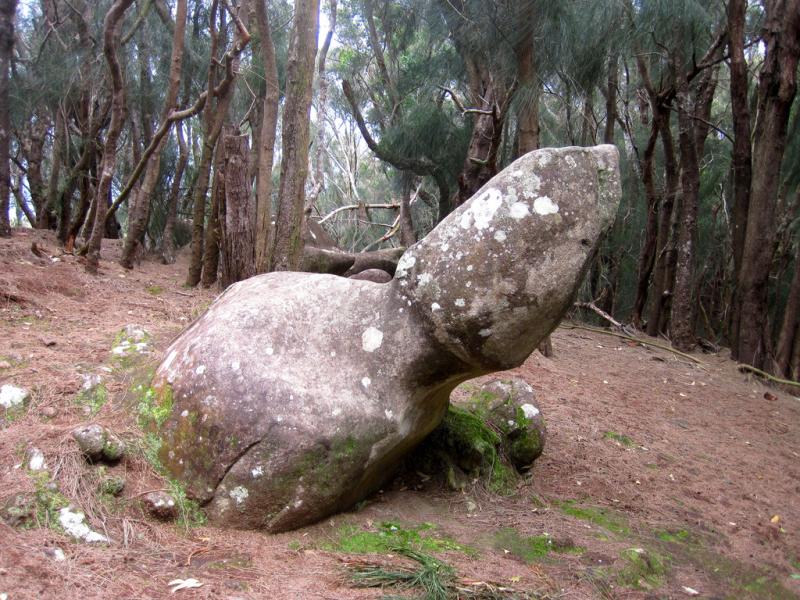
According to legend, Nananhoa, a male fertility god, was admiring a beautiful young woman on the banks of a pond. But his wife, Kawahuna, in a fit of jealousy, went for the young woman, who had done nothing to deserve it, and pulled her by the hair.
Nananhoa then struck Kawahuna, who turned to stone. He then transformed himself into a phallic-shaped rock. Which, let’s be honest, is pretty standard behaviour for a fertility god.
5. Jeju Loveland
Jeju Loveland, in Jeju Province, South Korea, is an adults-only theme park devoted entirely to eroticism.
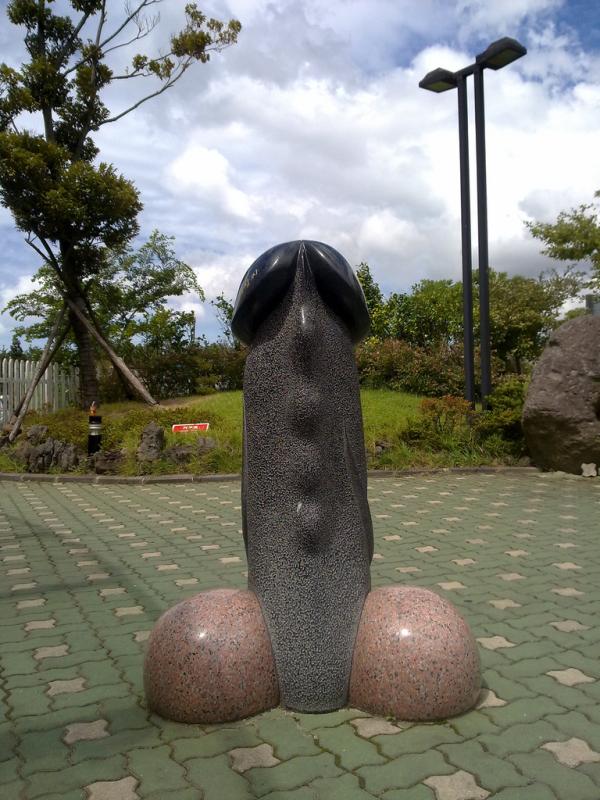
So you can feast your eyes on quite a few giant penises there; I told you more about it in this article.
6. Kanamara Matsuri
Kanamara Matsuri (or “Festival of the Steel Phallus”) isn’t a monument, but a festival celebrating fertility, held every spring in the city of Kawasaki, Japan.
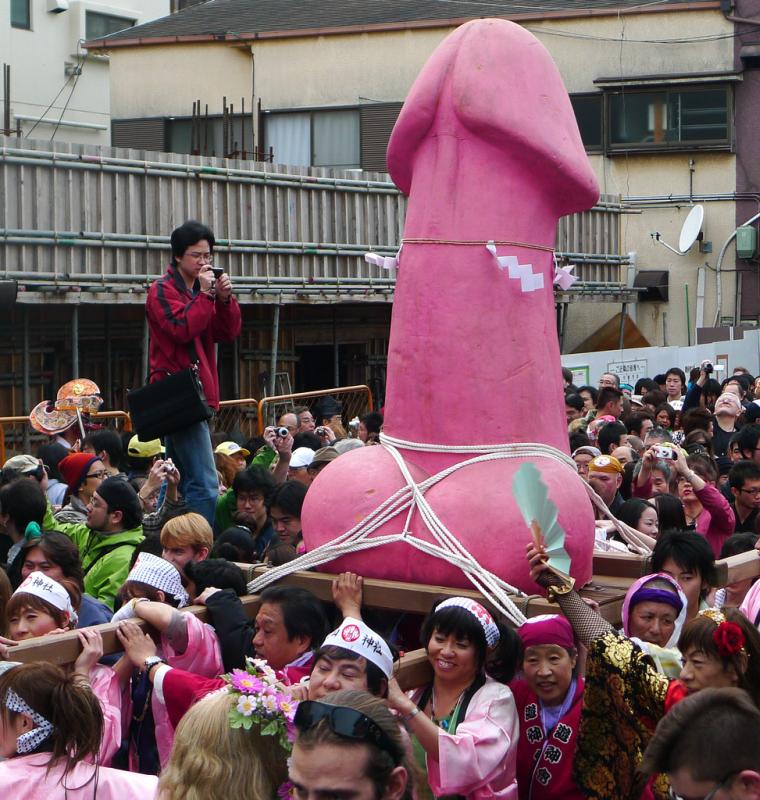
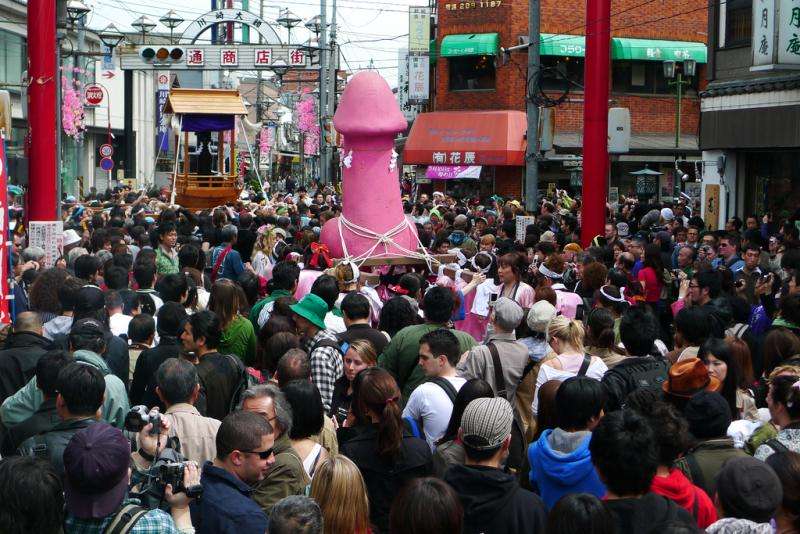
During the event, the crowds carry several enormous statues of penises, made from various materials, in a procession. I’ll tell you more about it very soon in a dedicated article.
7. Chao Mae Tuptim
The Chao Mae Tuptim in Bangkok is a shrine honouring the goddess Tuptim, the spirit said to reside in the tree that shelters it.
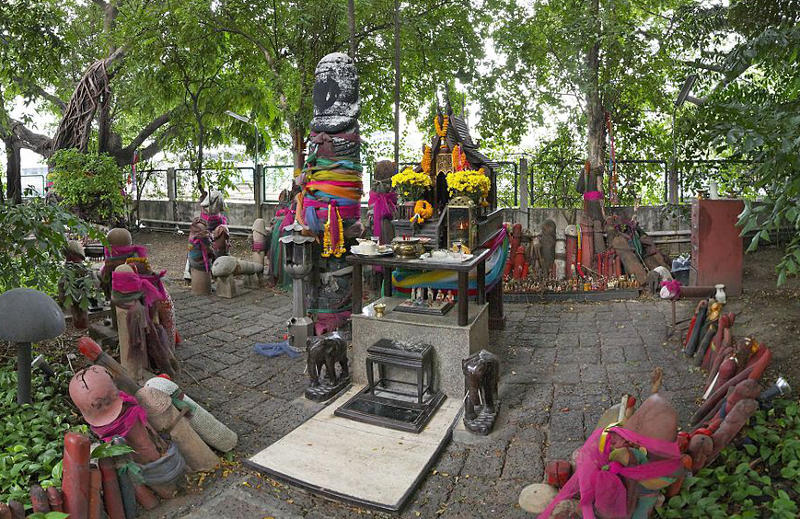
It is decorated with hundreds of lingam, phallic sculptures representing one of the forms of the Hindu god Shiva.
8. Cock Rock
Cock Rock (which could be translated as “Dick Rock”), in Arizona, is a particularly remarkable example of an accidental penis.
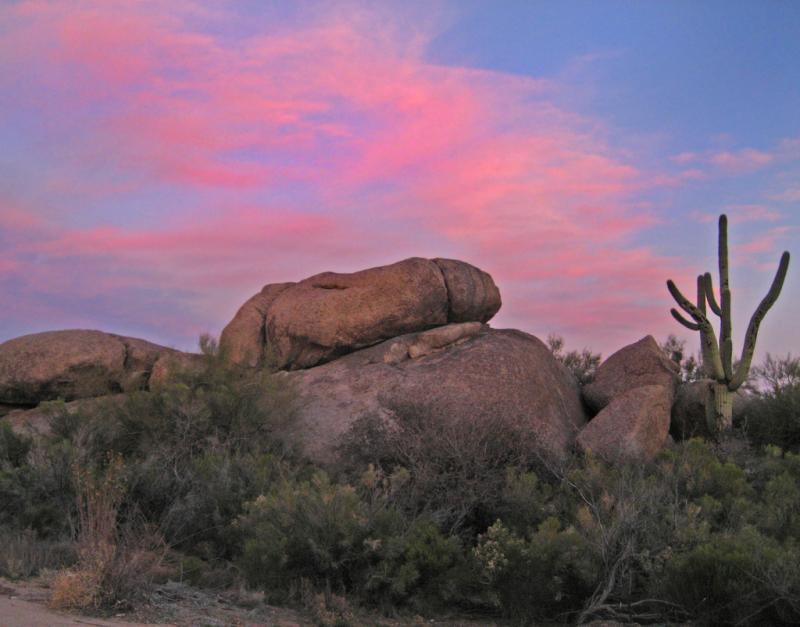
This granite rock formation, shaped like a cock, is, in fact, 100% natural (incidentally, “granit” and “bite” rhyme in French). Sometimes nature, too, enjoys drawing willies.
9. The Mayan ruins of Uxmal
The Mayan ruins of Uxmal, on Mexico’s Yucatán Peninsula, include a building called the Temple of the Phalluses.
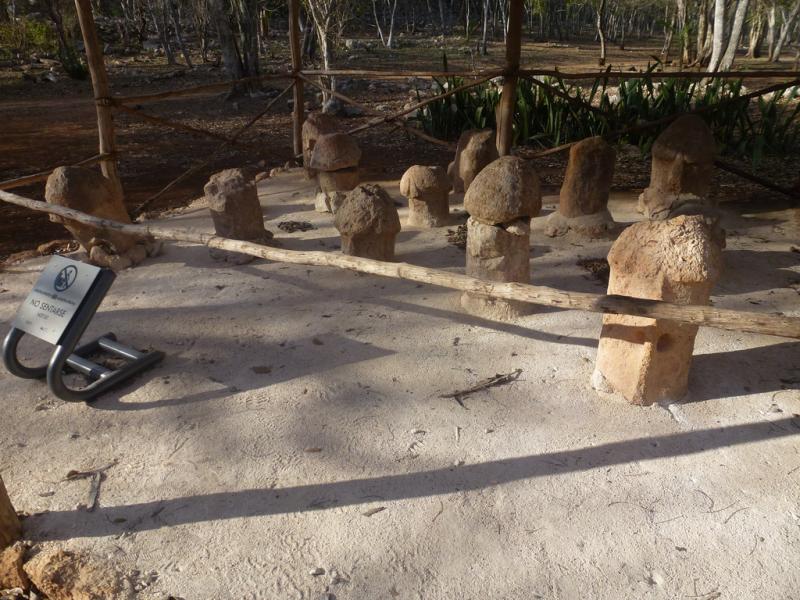
Around fifteen stone penis statues are housed beneath a palm-leaf roof.
10. Khalid Nabi Cemetery
Khalid Nabi Cemetery, also known as the “Valley of the Genitals”, is near the town of Gonbad-e Qabus in Iran, not far from a mausoleum believed to be the tomb of the prophet Khalid Nabi.
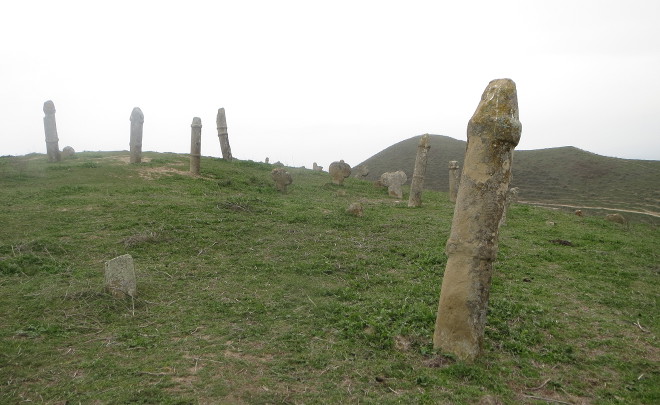
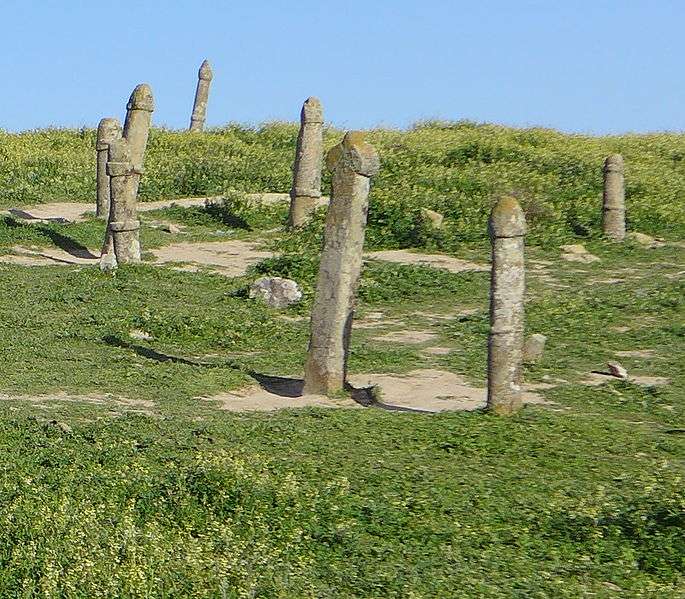
It contains more than 600 gravestones. Some are shaped like penises, others like a pair of breasts.
The exact origins of the cemetery are uncertain. According to legend, after being driven from the place by apostates, Khalid Nabi asked God to turn them to stone—and the people of the region then became these statues.
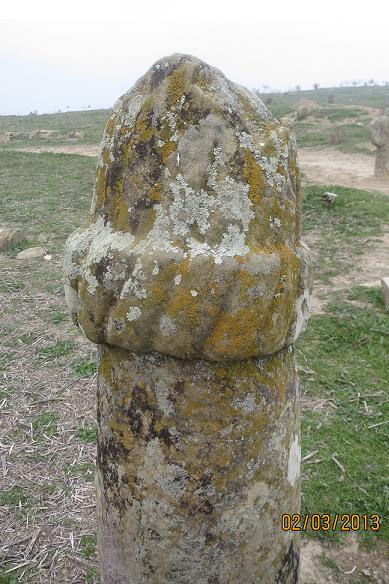
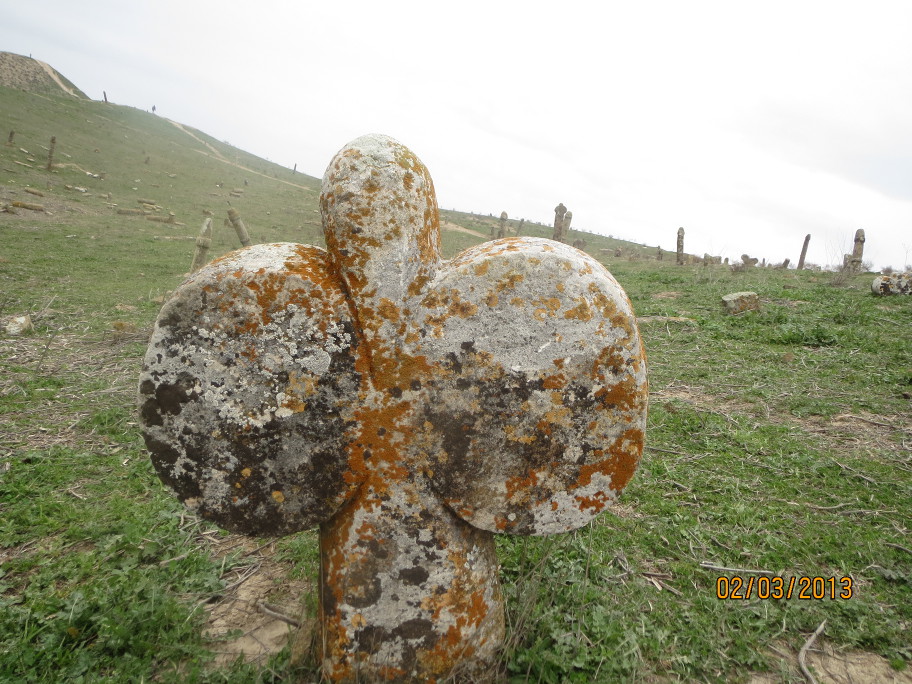
Unfortunately, tourists don’t always treat the site with respect, and a good number of the stones have disappeared over the past few years.
11. Bhutan
I’ve already told you, in an article about flying penises, about the phallic decorations that adorn buildings in rural parts of Bhutan.
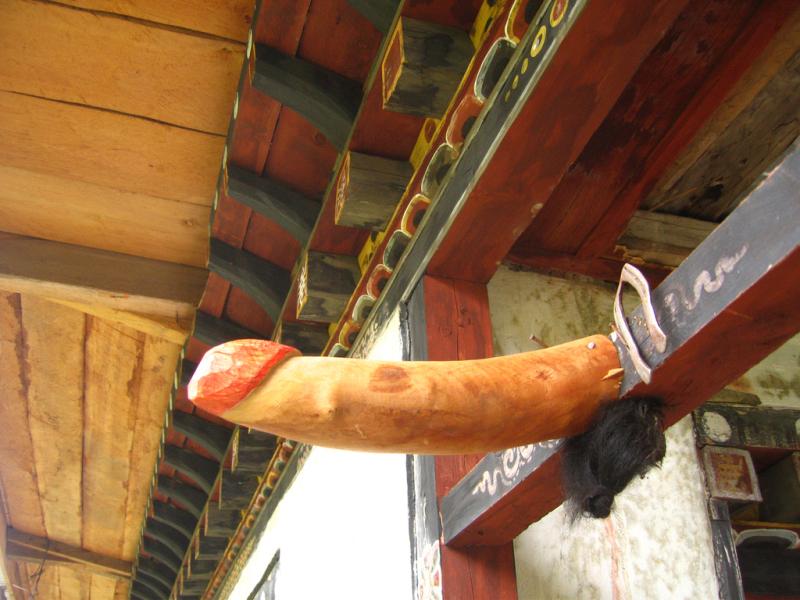
Good-luck penises are painted on walls and hung all over houses and fields. In short, phallic places are everywhere.
12. Pompeii
Before being wiped out by the eruption of Mount Vesuvius, the Roman city of Pompeii was flourishing and prosperous.
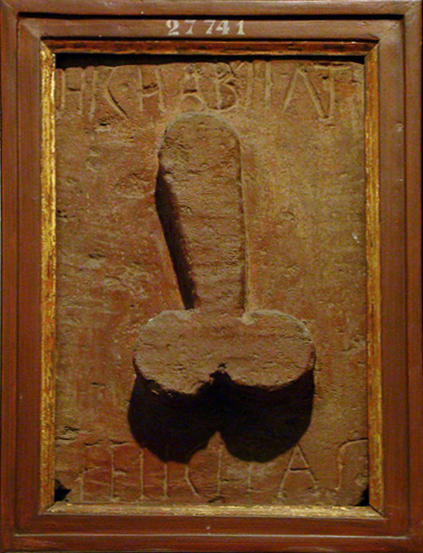
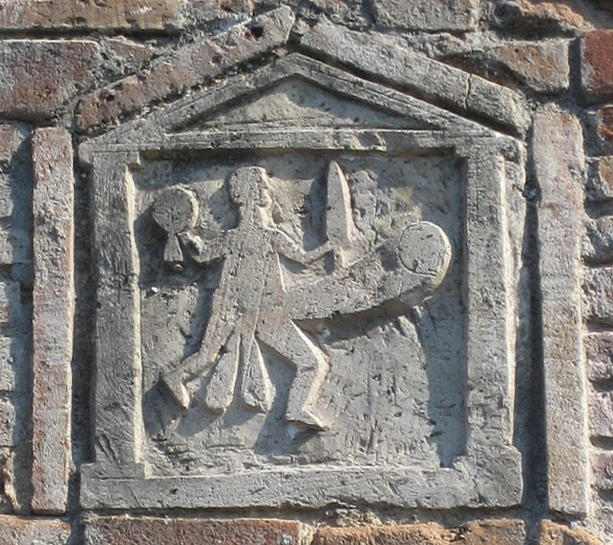
Art was therefore very much in evidence, and in Roman times people liked to draw and sculpt phalluses to ward off evil spirits.
The penis of Priapus, the god of fertility, was especially popular; he was also the protector of gardens and flocks. Priapus, a misshapen god particularly well endowed in the virility department, demands that donkeys be sacrificed to him during his festival. He hates them because of a quarrel over a cock-size contest.
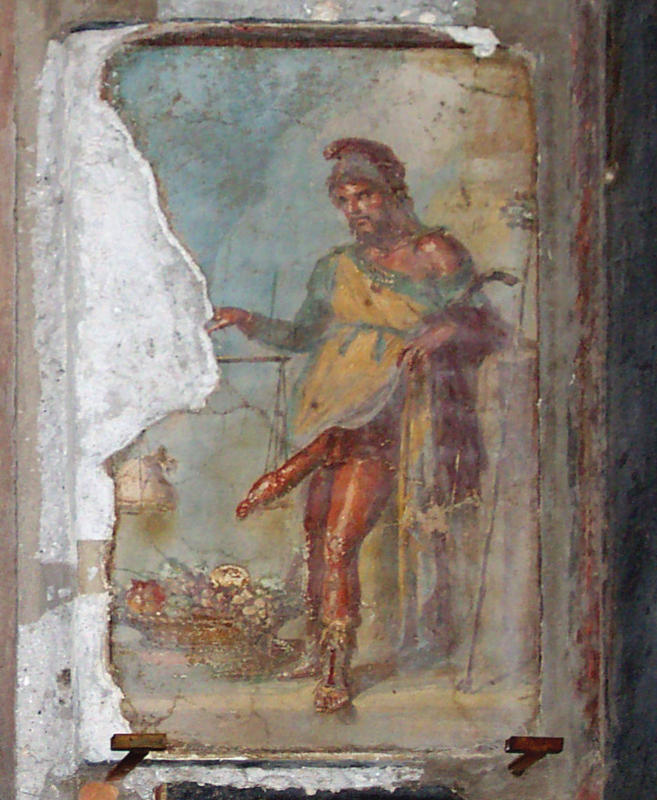
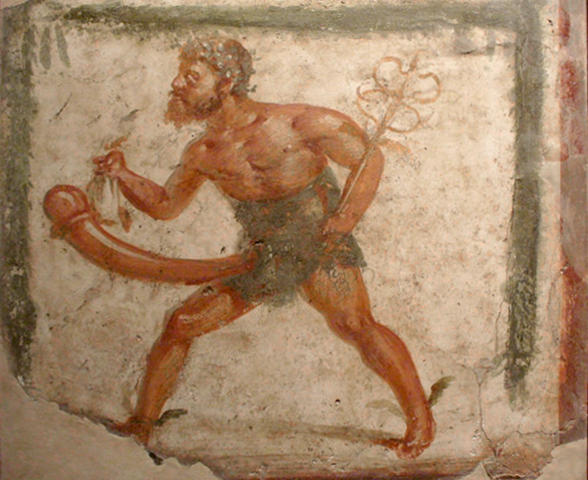
Priapus and his big old weapon on the walls of Pompeii
13. The Temple of Chucuito
The Temple of Fertility at Chucuito, Peru, boasts no fewer than 86 phallic-shaped monoliths, the tallest of which stand 1.5 metres high.
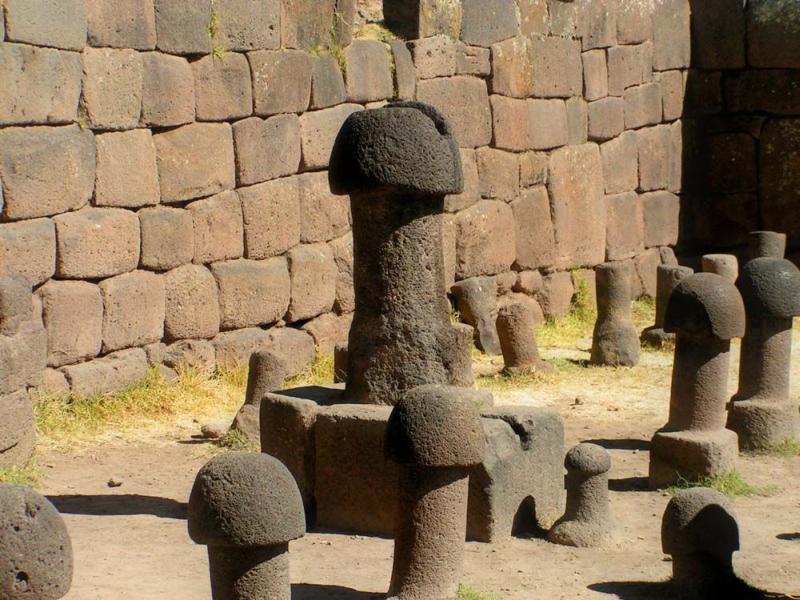
However, according to archaeologists who have been studying the site for more than half a century, it may in part be a hoax designed to attract tourists.
The ruins themselves are unquestionably very old, but it is highly likely that the stones were reassembled much later to form willies, and that this so-called “temple of fertility” actually served an entirely different purpose originally.
But local residents, rather pleased with the income generated by visitors in search of a temple full of dicks, prefer to keep the legend alive and steer clear of scientific debate.
16. El Infiernito
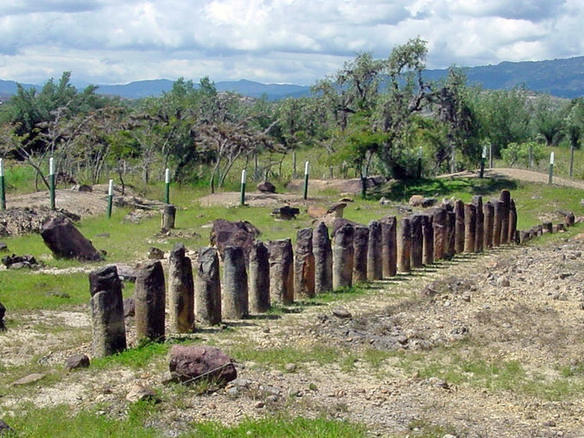
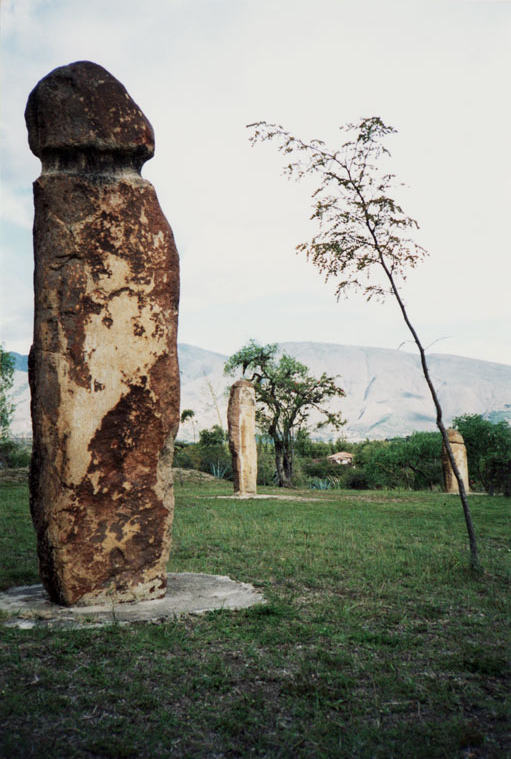
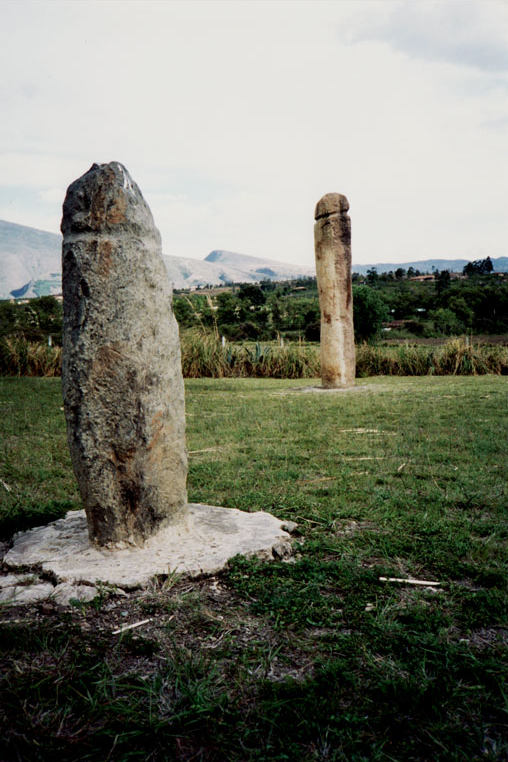
Located in Villa de Leyva, Colombia, El Infiernito is a phallic monument erected by the Muisca people.
Surrounded by phallic menhirs, the site was used for religious ceremonies and purification rituals, and also served as a rudimentary observatory.
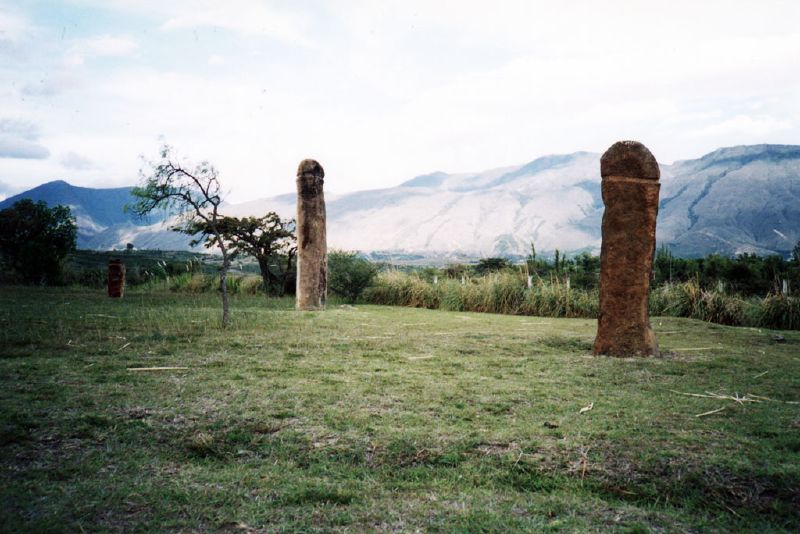
When they arrived, the Spanish Conquistadors, believing they had stumbled upon a site where the devil was worshipped, named it “Little Hell” (in Spanish, “El Infiernito”).
17. The Iizaka-Onsen shrine
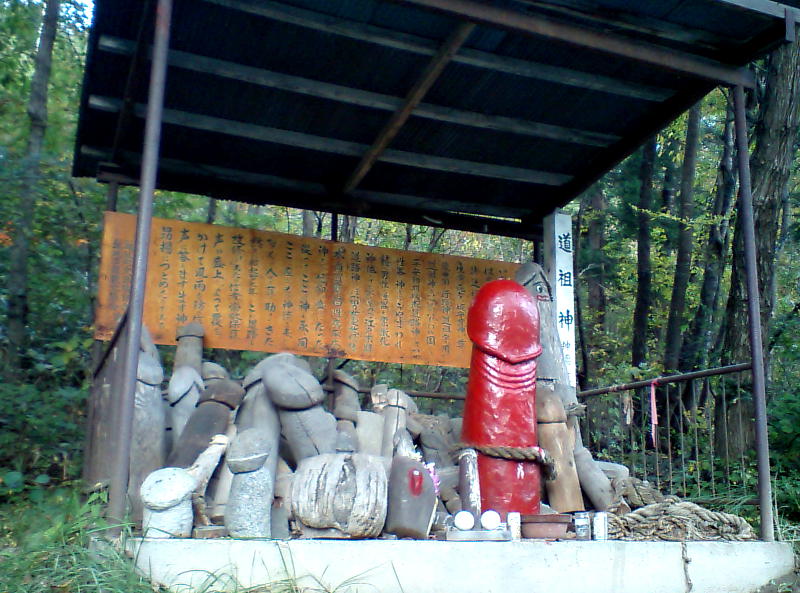
North-west of Iizaka-Onsen, a district of the (now sadly notorious) city of Fukushima, Japan, there is (or was there? The photo dates from 2007) a fertility shrine decorated with numerous wooden and stone penises.
18. Tham Phra Nang
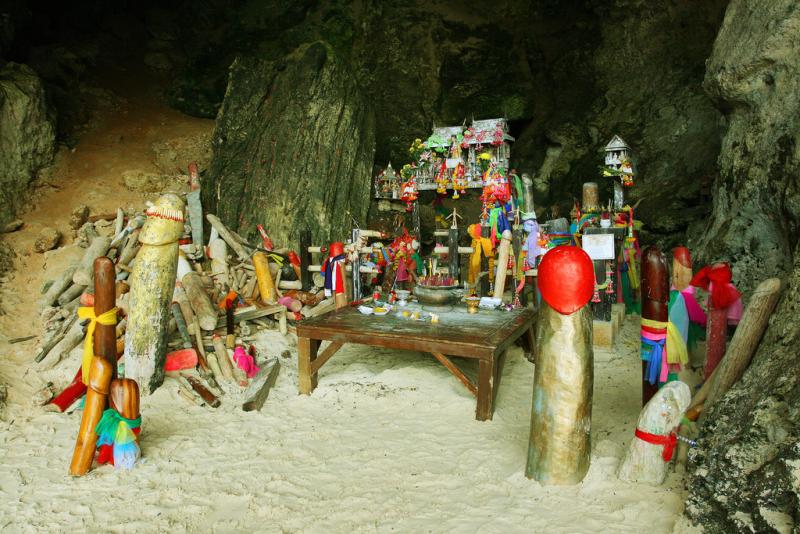
Tham Phra Nang, or “Penis Cave”, is a cave on Phra Nang Beach in Krabi Province, Thailand.
It is adorned with a multitude of stacked penis sculptures.
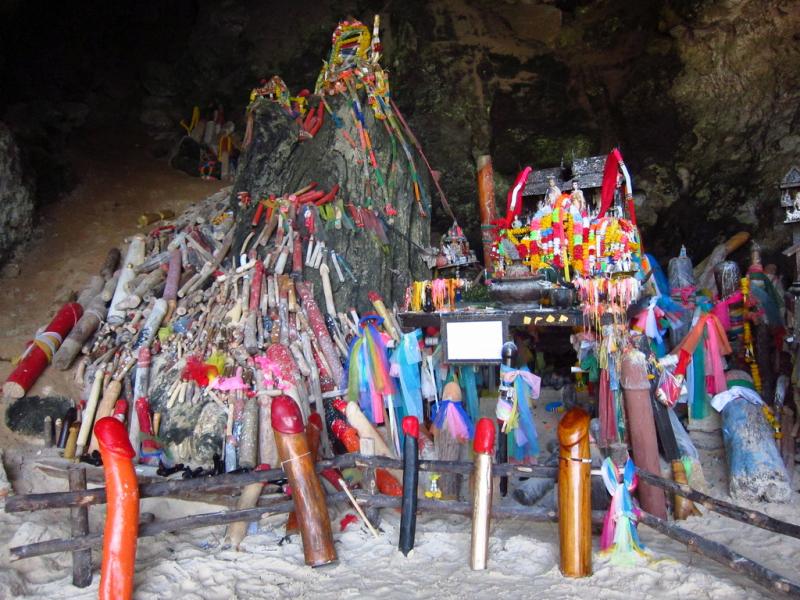
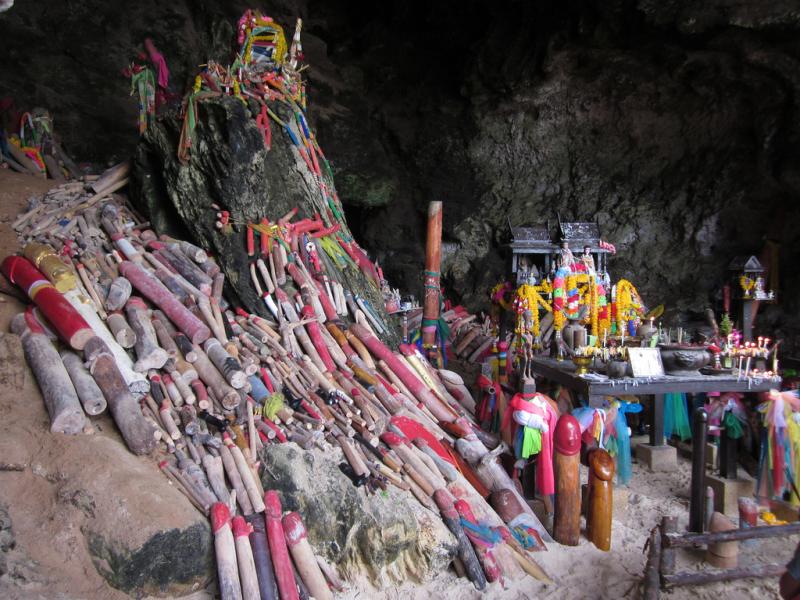
Two different legends surround this cave.
Either Phra Nang was an Indian princess who died in a shipwreck, or she was the wife of a sailor lost at sea, who waited desperately in this cave for her husband to return, right up to the end of her life.
19. The Temple of Sukuh
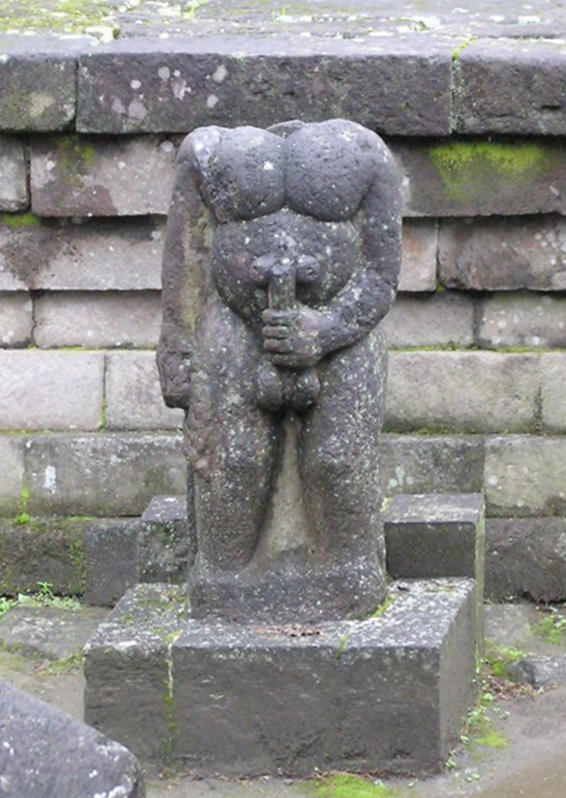
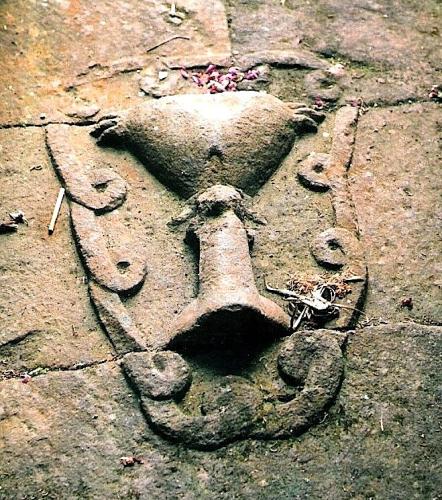
The Javanese temple of Sukuh, in Indonesia, is full of phallic statues and bas-reliefs.
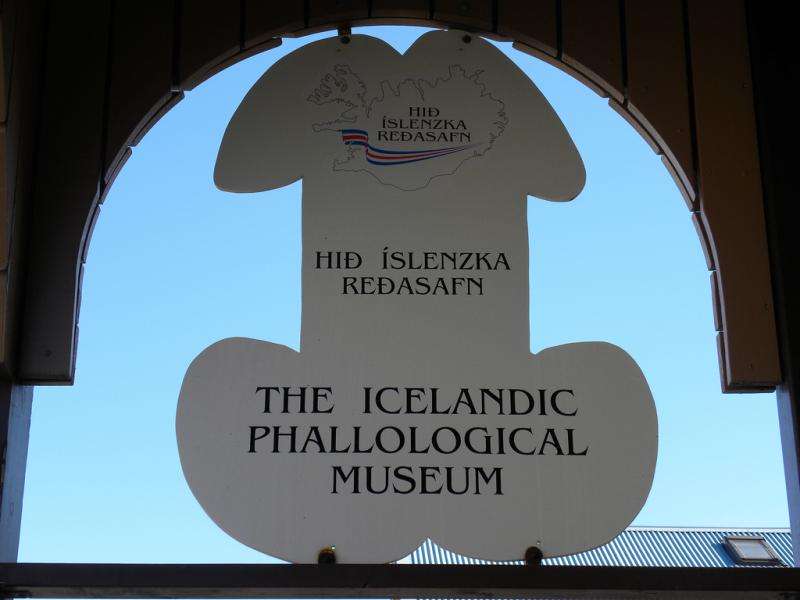
20. The Icelandic Phallological Museum
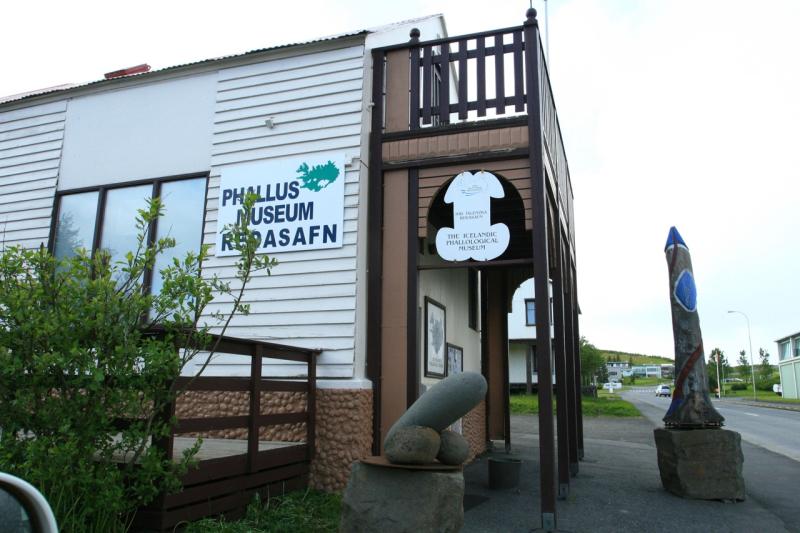
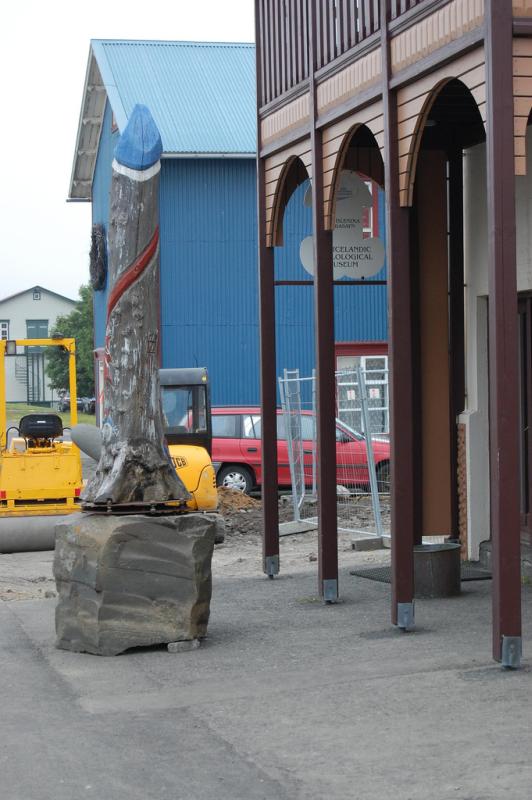
The Icelandic Phallological Museum is a museum devoted entirely to penises.
You can admire phalluses from various species, preserved in jars of formaldehyde, as well as statues of willies.
21. The Formosan Aboriginal Culture Village
The Formosan Aboriginal Culture Village in Taiwan is not a real village, but a theme park created in 1986.
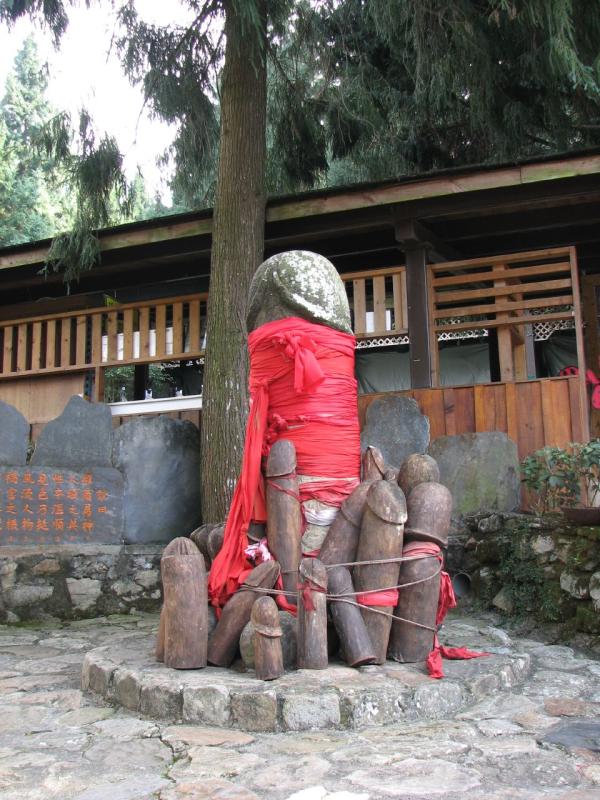
It pays tribute to indigenous culture while attracting tourists. The decorations include phallic sculptures and lingam.
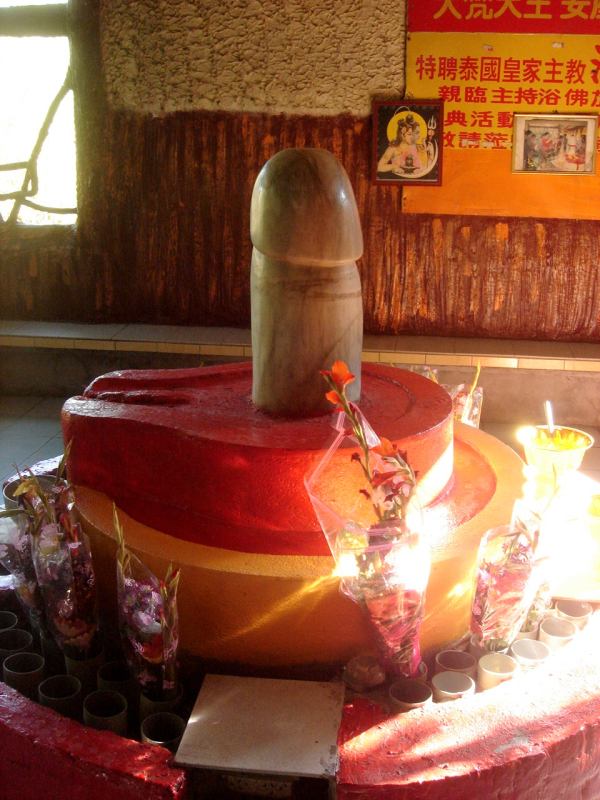
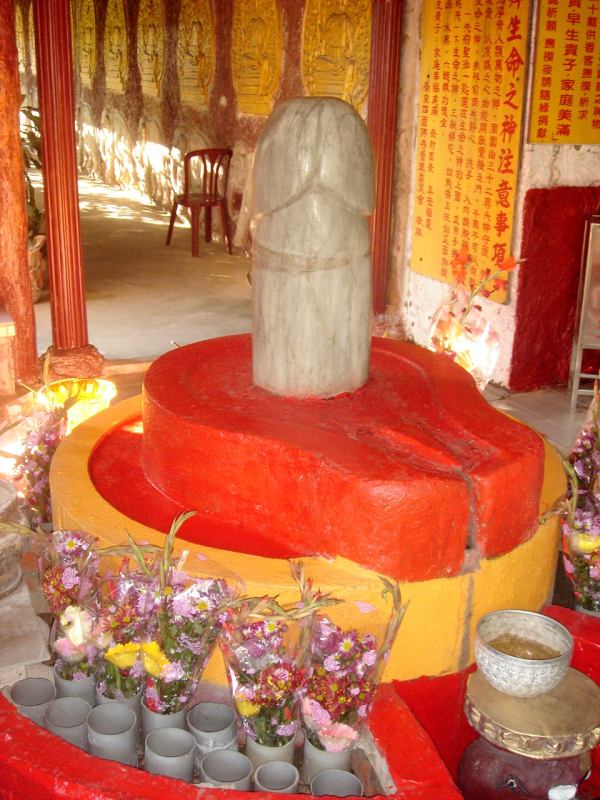
22. The Buddha Temple in Changhua
The Buddha Temple in Changhua, Taiwan, houses a phallic lingam in honour of the god Shiva.
23. Wellust
In the Dutch city of Utrecht, beside a canal called the Nieuwegracht (literally, “new canal”), stands a statue bearing the inscription “Wel lust”.
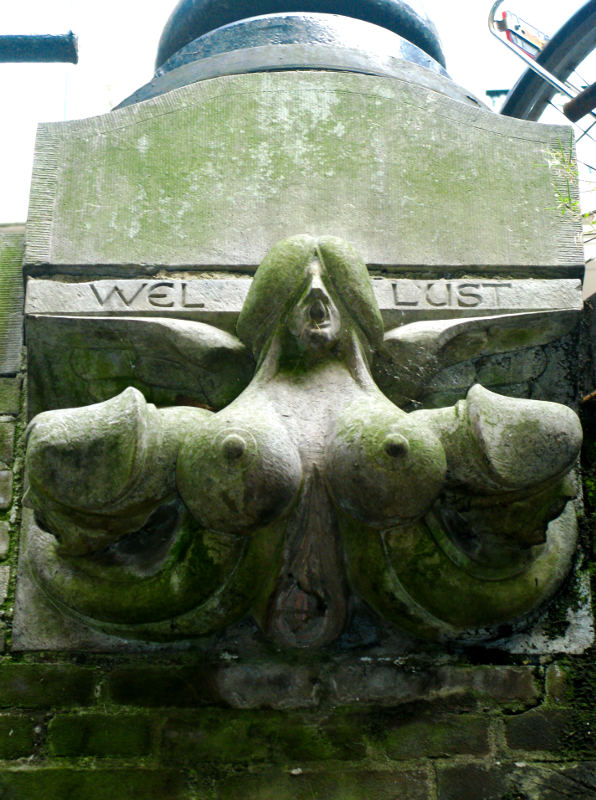
This strange statue shows a woman with an ample bosom and three penis-heads towering over a female sex. It represents lust, one of the seven deadly sins. “Wellust” also means “lust” in Dutch.
24. The Cerne Abbas Giant
The Cerne Abbas Giant is a figure carved into the chalk hillside, showing a naked human silhouette holding a club and sporting a prominently displayed erect penis.
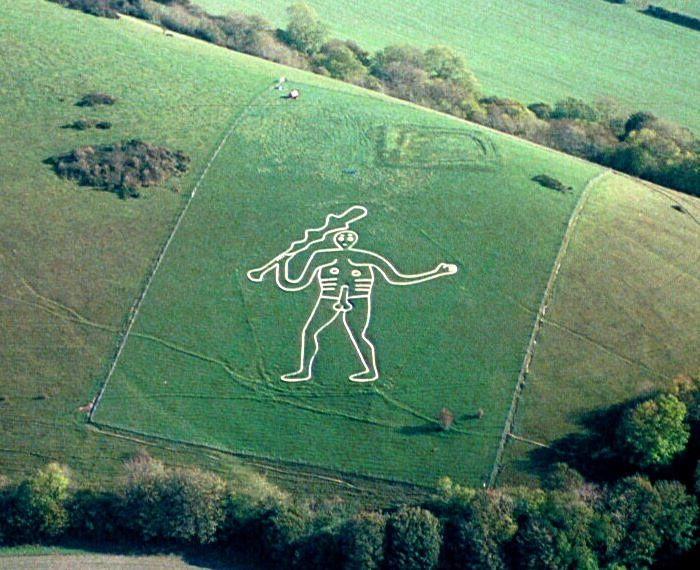
Historians believe this figure may date from around 1600, during the English Civil War. The giant could represent the mythological hero Hercules, as a way of mocking Oliver Cromwell, the politician nicknamed “the English Hercules” by his enemies.
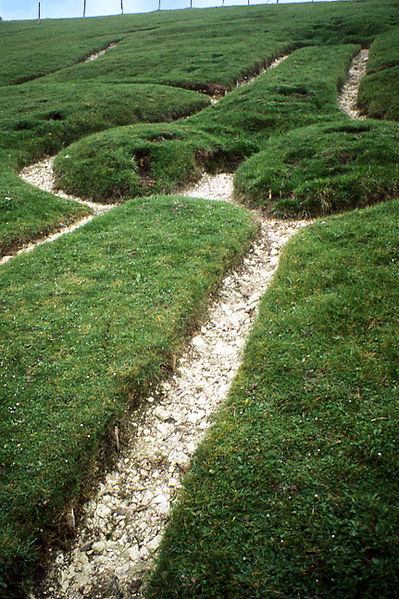
When The Simpsons Movie came out in 2007, the poor giant was given a companion: in the neighbouring field, a Homer Simpson in his underpants, doughnut in hand, was drawn.
25. “Phallus”, by Eckart Grenzer
The statue “Phallus” is a granite sculpture created by the artist Eckart Grenzer in 1984.
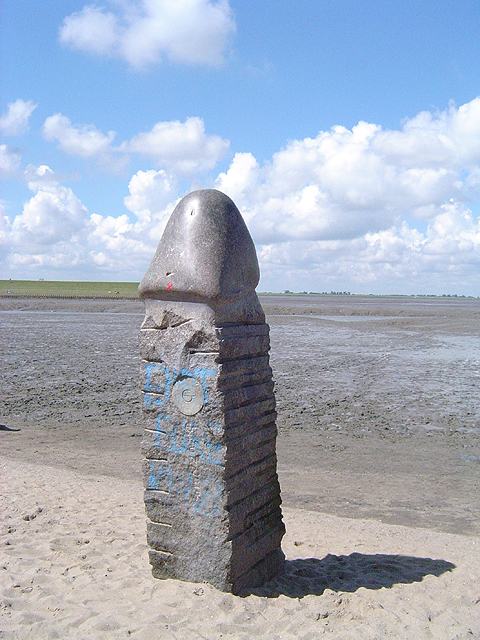
It stands on Dangast beach in Germany. With every tide, this stone phallus meets the sea, metaphorically coupling with it.
26. Westminster Bridge
The famous London bridge, Westminster Bridge, certainly wasn’t meant to be phallic.
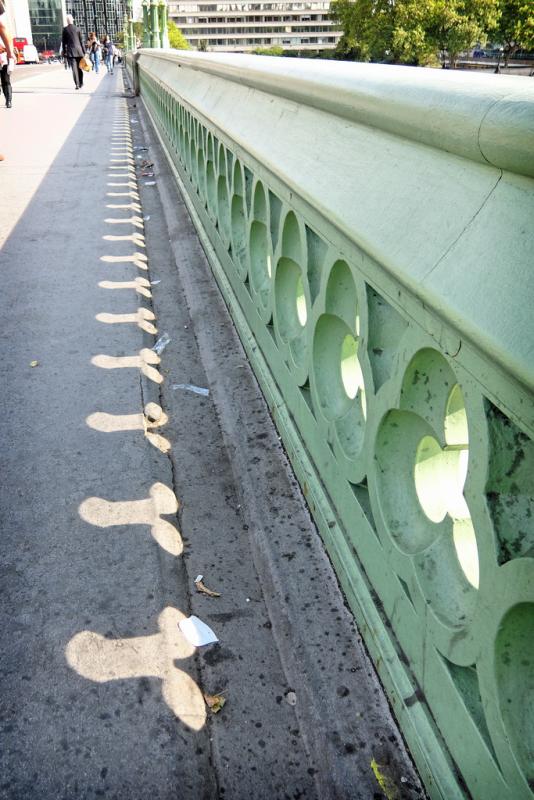
But the sun played a trick on it, and if you look at the shadows cast by its patterns, you can make out some rather suggestive shapes.
27. The Nikaho Fertility Shrine
The Nikaho Fertility Shrine in Japan features a stone penis decorated with cords.
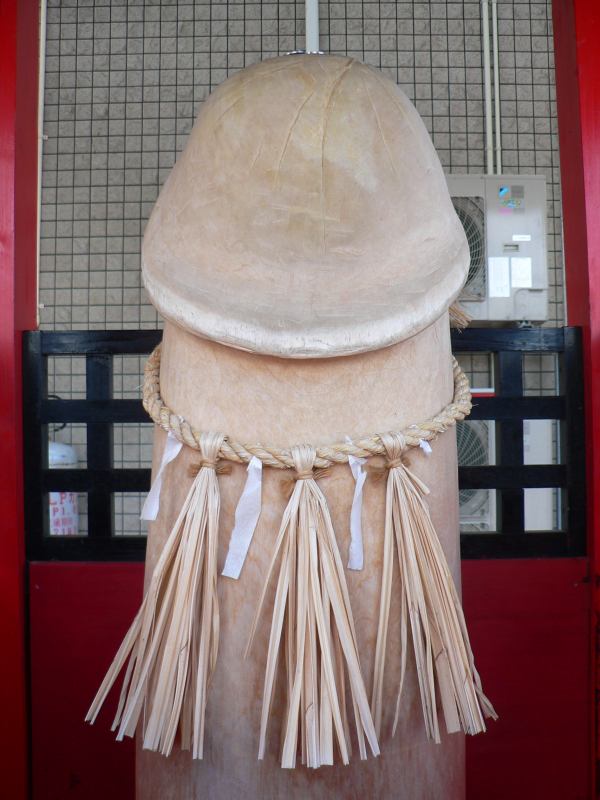
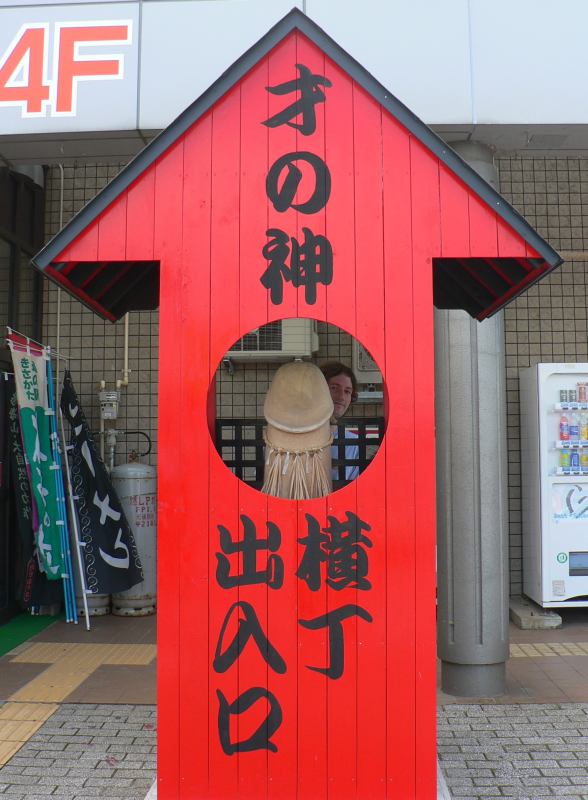
28. Michelangelo’s Bacchus
In Rome, it’s hard to know whether the resemblance between the cornucopia held by this Bacchus, sculpted by Michelangelo, and a gigantic mutant todger is intentional or accidental.
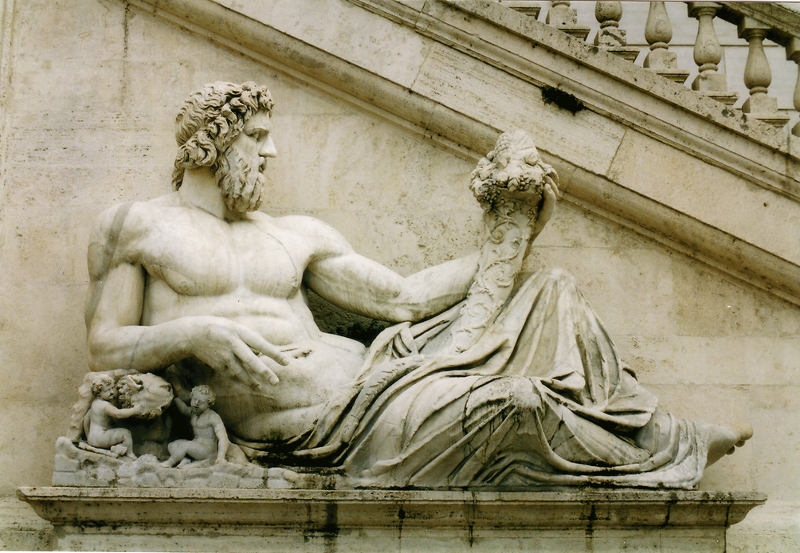
But in any case, there’s no denying that the statue’s pose is rather ambiguous.
29. Long Tom
Long Tom is a phallic monolith in Cornwall, England.
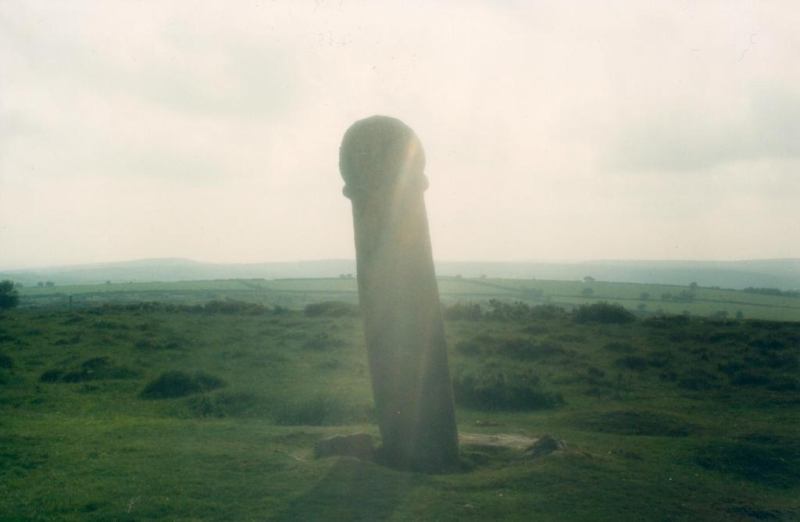
Originally, it was probably a Neolithic menhir, which was later Christianised by having a cross carved into its top.
30. Hanoi Museum of Ethnology
The fence around the Hanoi Museum of Ethnology in Vietnam is decorated with statues of couples about to get down to it, the man’s penis ostentatiously erect.
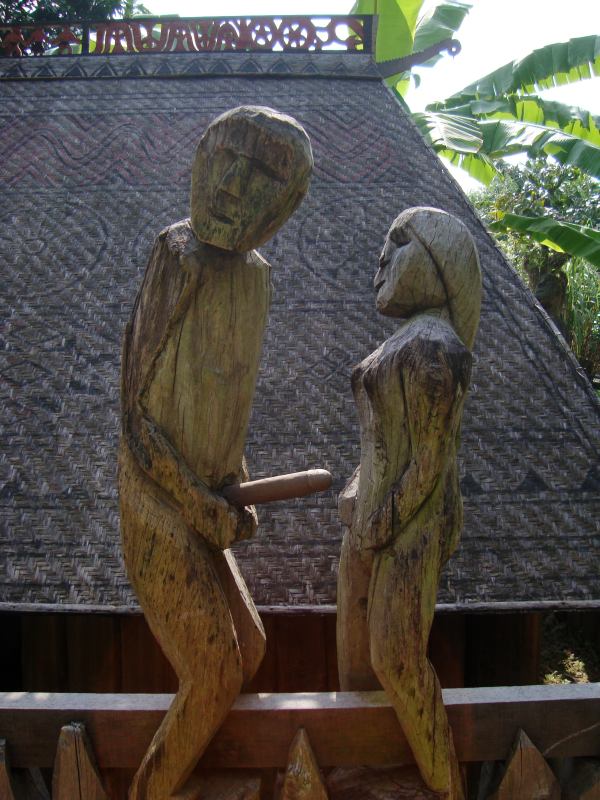
Photo sources for these phallic places
(Creative Commons licence):
- Kharkhorin Rock: Flickr galleries by einalem and alex_and_stacy.
- Temple of Dionysus on Delos: Flickr gallery by the Institute for the Study of the Ancient World.
- Haesindang Park: Flickr gallery by Mike Rowe.
- Kaule o Nanahoa: Flickr gallery by davidd.
- Jeju Loveland: Flickr gallery by LonelyBob.
- Kanamara Matsuri: Flickr gallery by David Shackelford.
- Chao Mae Tuptim: Wikimedia.
- Cock Rock: Flickr gallery by Jason Corneveaux.
- Mayan ruins of Uxmal: Flickr gallery by Mark Bellingham.
- Bhutan: Flickr gallery by graham.
- Pompeii: Flickr galleries by F. Tronchin, a-birdie, mararie and Leandro Neumann Ciuffo, Creative Commons.
- Khalid Nabi Cemetery: Wikipedia and Wikimedia.
- Temple of Fertility at Chucuito: Flickr gallery by Jay Joslin.
- El Infiernito: Flickr gallery by Gordon McMullan and Wikipedia.
- Iizaka-Onsen Shrine: Flickr gallery by likeablerodent.
- Tham Phra Nang: Flickr galleries by Ken Marshall, fabulousfabs and Giuseppe Bognanni.
- Temple of Sukuh: Wikipedia.
- Icelandic Phallological Museum: Flickr galleries by katie king, Richard Baer and JasonParis.
- Formosan Aboriginal Culture Village: Flickr gallery by hellomofo.
- Buddha Temple in Changhua: Flickr gallery by Wm Jas.
- Wellust: Flickr gallery by Expectmohr.
- Cerne Abbas Giant: Wikipedia.
- Phallus, by Eckart Grenzer: Flickr gallery by mightymightymatze.
- Westminster Bridge: Flickr gallery by Alex Brown.
- Nikaho Fertility Shrine: Flickr gallery by Chris Lewis.
- Michelangelo’s Bacchus: Flickr gallery by Merlin.
- Long Tom: Flickr gallery by Richardzinho.
- Hanoi Museum of Ethnology: Flickr gallery by Gavin White.